
Badjina, the Greek Naked Pie
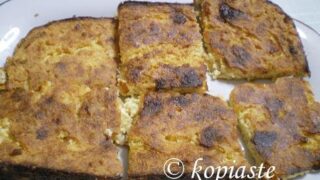
Badjina is a Greek regional pie made mainly in the region of Thessaly, which consists of a batter made with milk, olive oil, eggs, goat cheese and corn meal, in which pumpkin is mixed in.
In Greek they call this pie ξεβράκωτη (ksevrakoti) meaning without its underwear, as it is a pie without its knickers, the phyllo.
It is the most easy of all Greek pies and no skills are required to make it plus it tastes terrific. The most difficult part of the whole procedure is to grate the pumpkin but I use the food processor and have this done in five minutes.
I had heard of this pie before but never tried it until last February when I participated in a cooking contest. One of the judges and chefs, Giannis Baxevanis made this pie but I was so nervous that I don't remember anything about the recipe.
Since then I've been wanting to make this pie but never got around to it. Last Tuesday when I went to the farmers market I bought some butternut squash to make it for my entry for Savory Pies.
I searched the internet for a recipe and found only a few. I ended up with this one as like most of the Greek recipes it was a bit vague as to the ingredients and instructions.
My Greek friends who may read the recipe in Greek will see that I have made a few changes. First of all I reduced the quantity of the olive oil used, from 2 cups to 1 ½ cups, I added eggs, I used two kinds of cheese (feta and goat cheese, instead of only feta) and I used two kinds of flour (instead of 1 kilo self raising flour, I added half the quantity of flour and half corn meal).
A simple recipe with no herbs or spices just to highlight the taste of the pumpkin and the cheese. I was tempted to add some spices but good thing I didn't as the result was excellent.
I know that a lot of feta is involved, which is quite expensive. However, if where you live you can buy barrel feta ask to buy the leftover crumbles. It's way much cheaper and that's what we usually do in Greece for all our pies. If you find it too expensive to make add half the quantity of feta and another type of cheese, maybe ricotta if it is cheaper.
This is my first entry for my event Savory Pies and hope that by the deadline, which is the end of September I shall introduce you to a few more Greek pies.
How to make Badjina
The mixture was too much for my tin, so I made a small one in a Pyrex which I covered with cling film and placed in the freezer for next week.
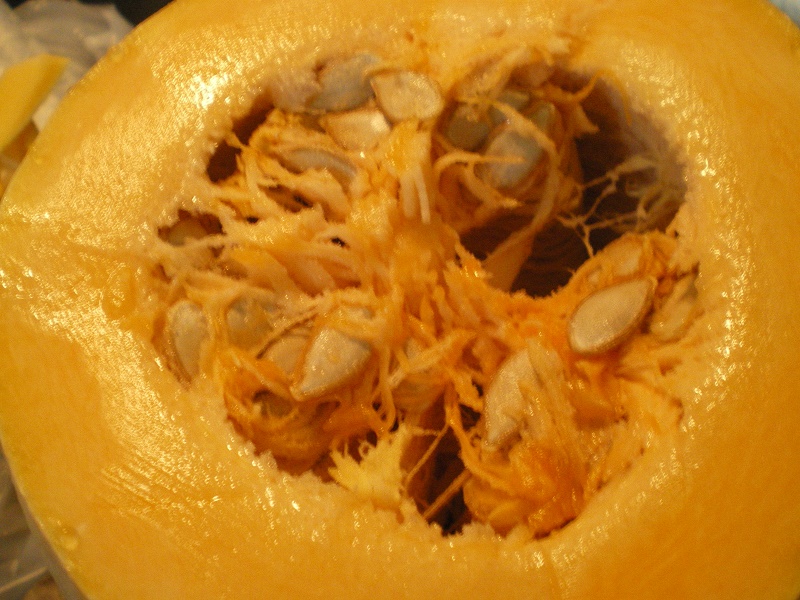
Peel the pumpkin or butternut squash and with a spoon remove the seeds and strings.
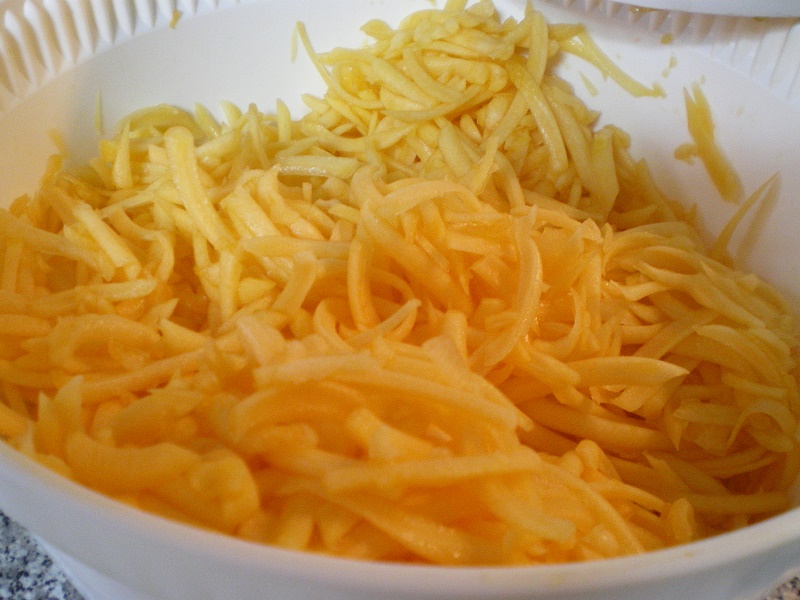
Grate the pumpkin and mix all the ingredients reserving one cup of cheese and the butter.
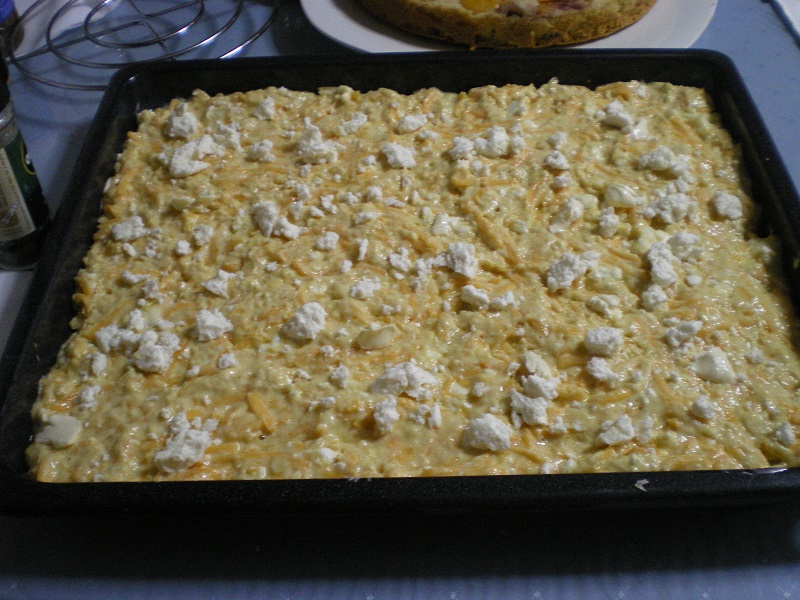
You should have a thick batter.
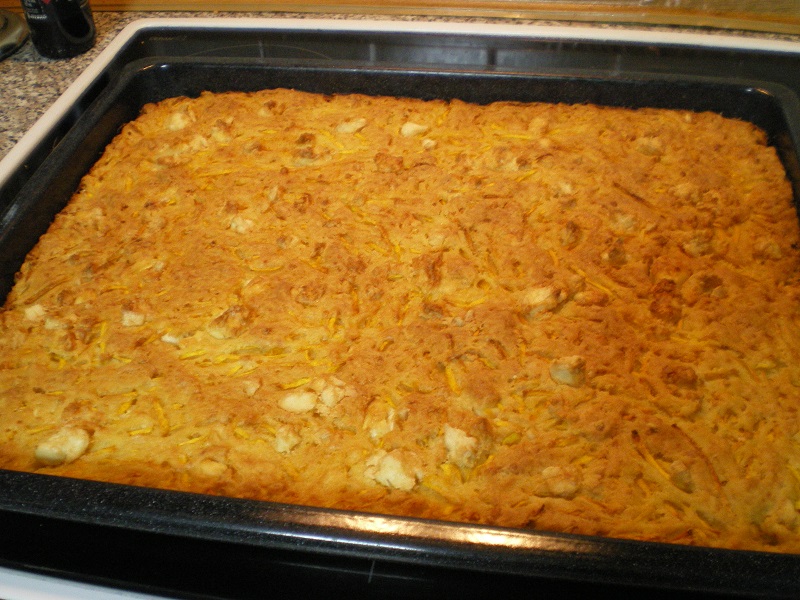
Grease the baking tin with olive oil and spread the batter, which should not be higher than 2 cm in the tin.
Add the crumbled cheese on top as well as little pieces of butter.
Preheat the oven to 180o C and bake for about 45 minutes to 1 hour, depending on your oven, until golden brown.
Set aside for 15 minutes to slightly cool and then cut into pieces.
.
Note:
The above quantity is enough for two baking tins. The second one I used was 32 x 22 cm.
I made this big batch to feed a large crowd. You can downscale the amount to make less.
If you prefer to bake both, you can store leftovers in the fridge up to a week. You can also wrap it in cling film and freeze it.
Alternatively, cover the second baking tin with cling film and store in the fridge for 2 - 3 days before baking or store it in the deep freezer, up to 3 months. Thaw before baking.
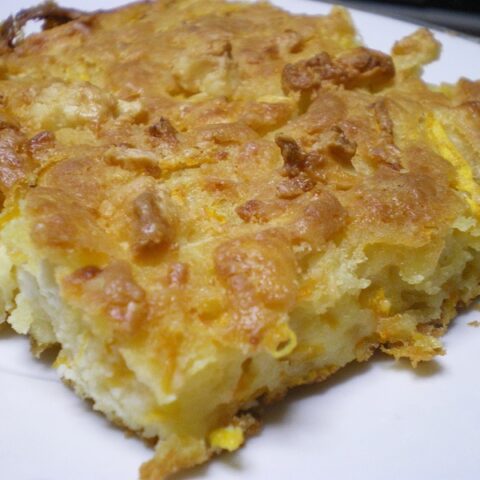
Badjina, the Greek Naked Pie
Badjina is a Greek regional pie made mainly in the region of Thessaly, which consists of a batter made with milk, olive oil, eggs, goat cheese and corn meal, in which pumpkin is mixed in.
Ingredients
- 1,200 grams pumpkin or butternut squash or courgettes (after been peeled and seeds removed)
- 250 grams all-purpose flour
- 750 grams corn meal
- 1 cup olive oil
- 700 grams milk
- 1 tablespoon salt
- 4 eggs
- 350 grams goat cheese
- 150 grams feta
- 70 grams butter
- Freshly grated black pepper
- 2 tablespoon olive oil, to brush the baking tin
Instructions
- Peel the pumpkin or butternut squash and with a spoon remove the seeds and strings.
- Grate the pumpkin on a box grater with large holes.
- Put the two types of flour, the milk, the olive oil, the eggs, salt and pepper and mix well You should have a thick batter
- Add the crumbled cheese reserving one cup as well as the grated pumpkin and mix to combine.
- Grease a large baking tin (35 x 45 cm) with olive oil and spread the batter (It should not be higher than 2 cms).
- Scatter the reserved crumbled cheese on top as well as little pieces of butter.
- Preheat the oven to 180oC and bake for about 45 minutes to 1 hour, depending on your oven, until golden brown.
- Set aside for 15 minutes to slightly cool and then cut into pieces.
Notes
The above quantity is enough for two baking tins. The second one I used was 32 x 22 cm.
I made this big batch to feed a large crowd. You can downscale the amount to make less.
If you prefer to bake both, you can store leftovers in the fridge up to a week. You can also wrap it in cling film and freeze it.
Alternatively, cover the baking tin with cling film and store the second one in the fridge for 2 - 3 days before baking or store it in the deep freezer, up to 3 months. Thaw before baking.
Nutrition Information
Yield 26 Serving Size 1Amount Per Serving Calories 330Total Fat 18gSaturated Fat 6gTrans Fat 0gUnsaturated Fat 11gCholesterol 48mgSodium 435mgCarbohydrates 34gFiber 3gSugar 3gProtein 9g
"These values are automatically calculated and offered for guidance only. Their accuracy is not guaranteed."
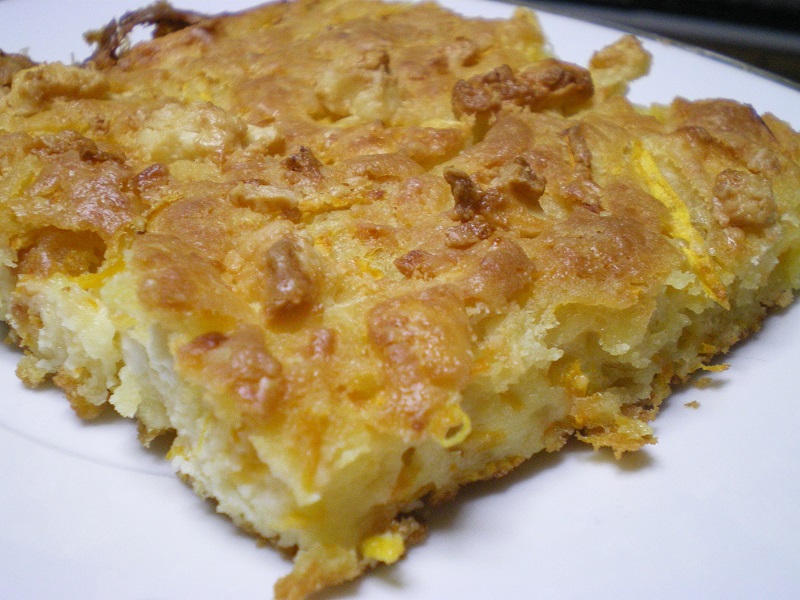
Greek Pies (Pites)
Greek pies (pita plural pites) are a staple in Greek cuisine. They are very versatile and can be either savoury or sweet. You can make a "pita" with vegetables, meat, fruit, etc.
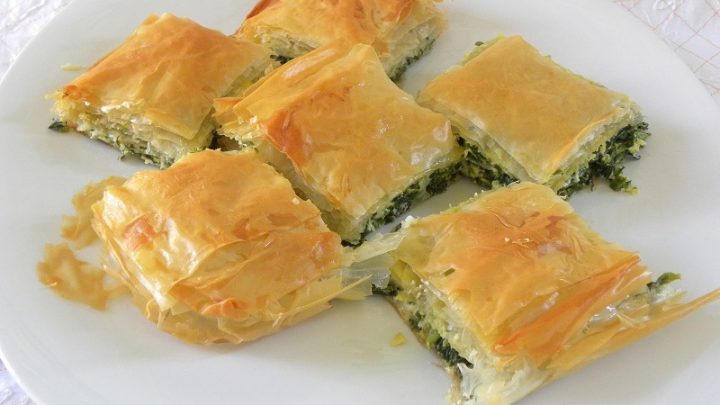
Spanakopita and Spanakopitakia
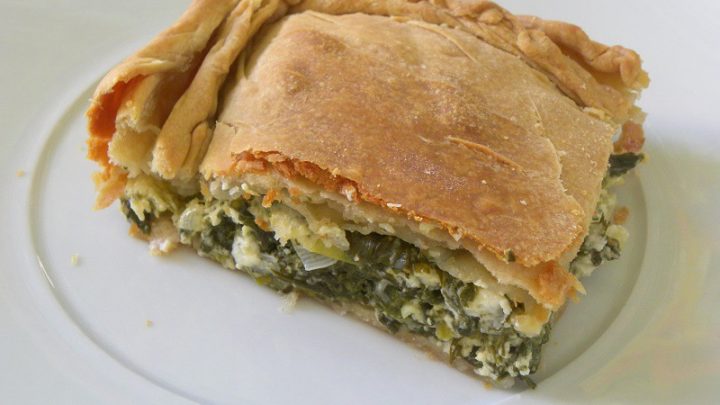
Spanakopita (Greek "σπανάκι + πίτα", spinach + pie) is a Greek pastry with a filling of spinach, feta cheese (sometimes in combination with anthotyro, which is a soft white cheese similar to ricotta, onions or green onions, eggs, herbs and seasoning.
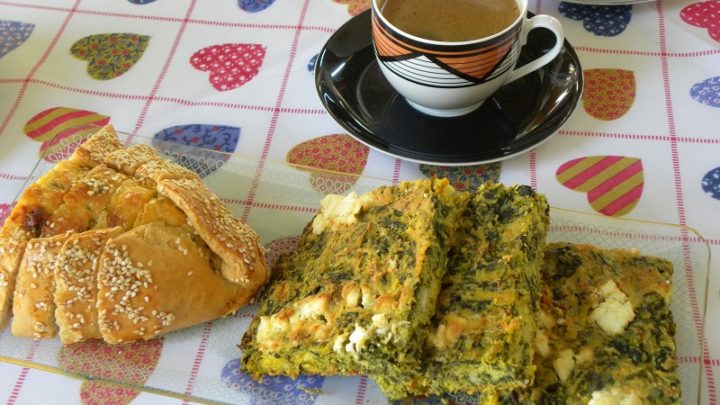
Plastos, Spanakopita from Thessaly and Epirus, Ressi and Kolokythopita (Zucchini Pie)
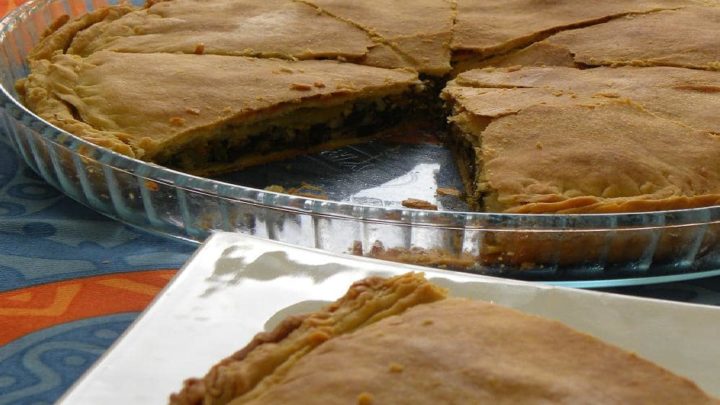
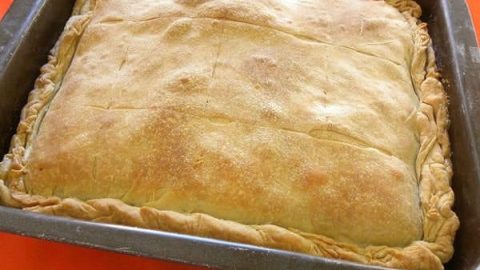
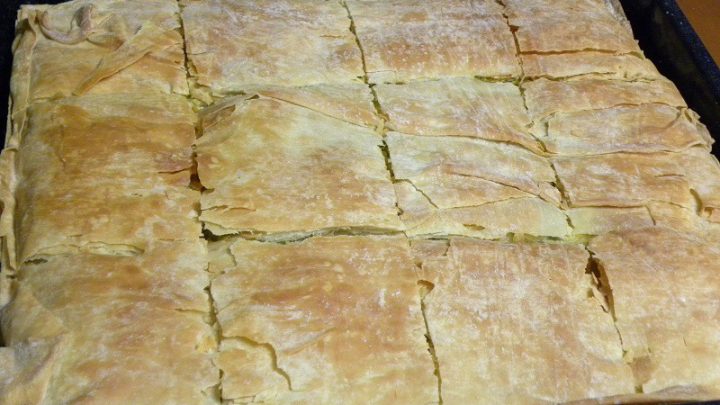
Plastos, which is a type of pita (pie) from Thessaly, is a much easier version of spanakopita without phyllo, made with spinach and corn meal, which is equally delicious. Â
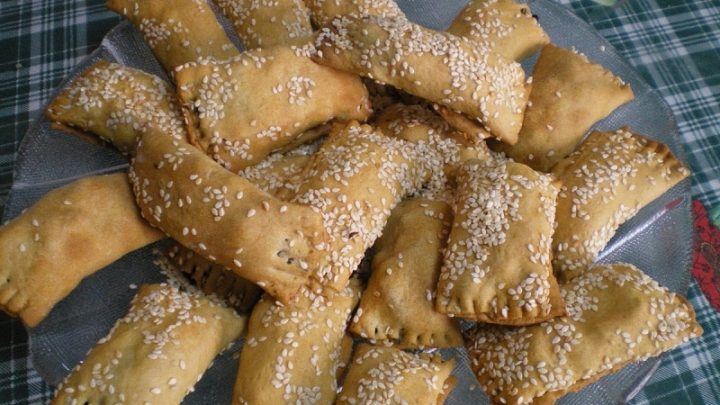
Eliopita, Eliotes or Eliopitakia (Cypriot olive pies)
Eliopita, Eliotes or Eliopitakia are Cypriot olive pastries made either as a bread, as a roulade, as turnovers or a pie, to accompany a cup of coffee or tea.
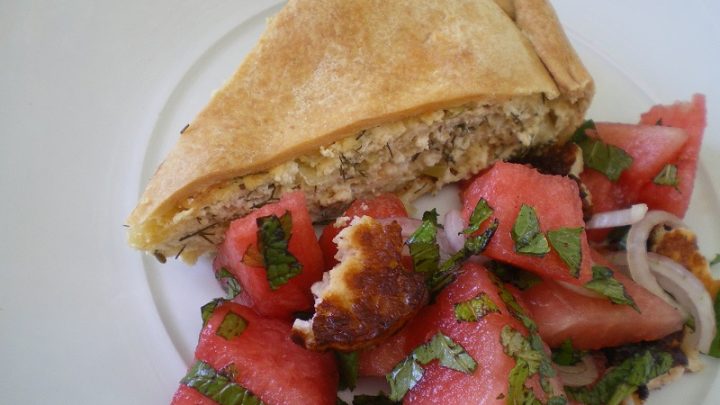
Tyropita me Maratho (Cheese and Fennel Pie)
A tyropita (cheese pie) made homemade phyllo, xinomyzithra and flavoured with wild fennel.
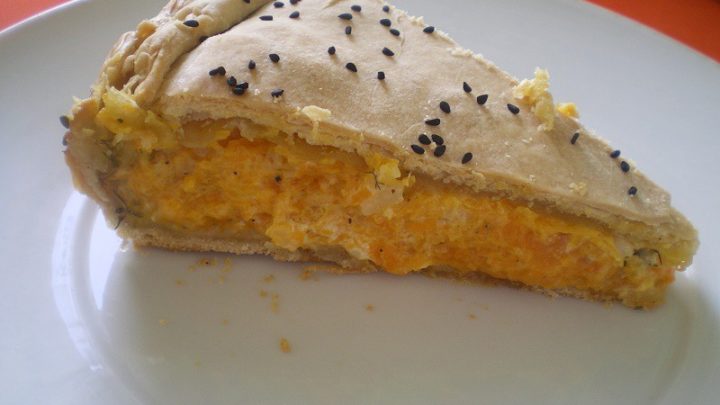
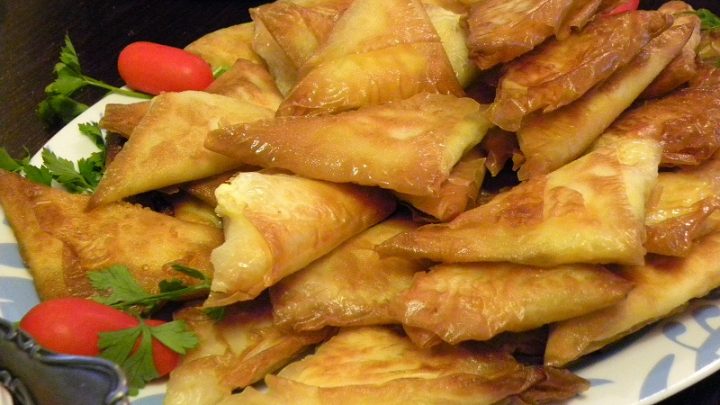
Tyropitakia (Cheese Triangles with Feta)
These tasty cheese-filled triangles are finger foods which can be served as appetizers, mezedes, side dishes, and snacks.
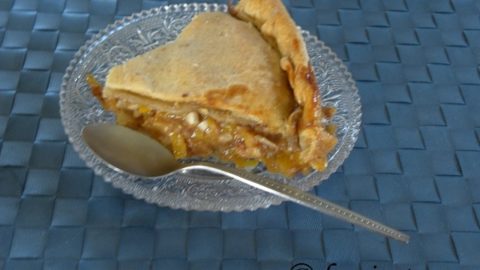

Milopita Bougatsa (Greek Apple Pie with Phyllo)
Milopita Bougatsa is a Greek Apple Pie, made with cooked apples and spices, which are then thickened with a semolina pudding and enclosed in phyllo.
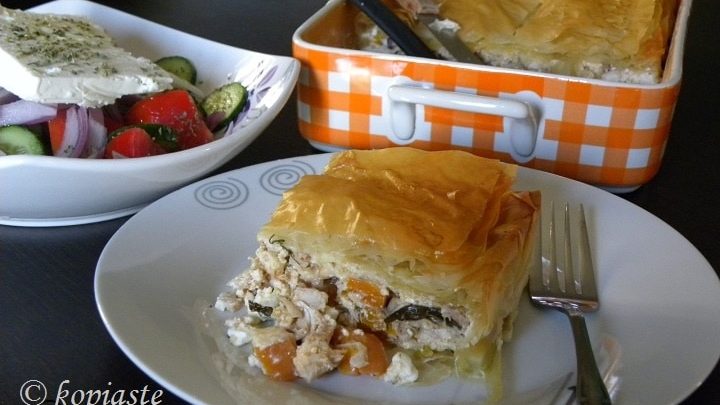
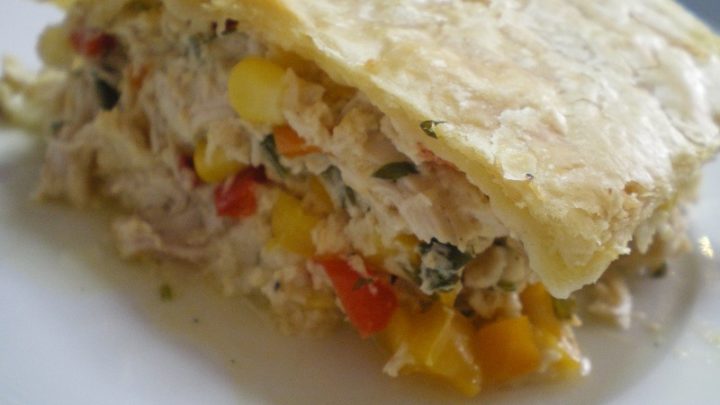
Agginaropita Me Prassa (Artichoke & Leek Galette)
Agginaropita is a delicious Greek pie made with artichokes and leeks. It is is great for lunch with a salad and leftovers can be eaten for breakfast or brunch.
Patsavouropita (the easiest Greek Tyropita - Cheese Pie)
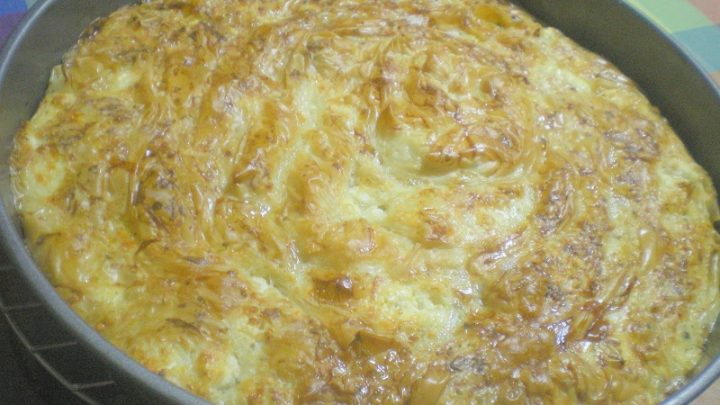
Patsavouropita is a traditional Greek, delicious savory pie with phyllo and feta, which is very easy to make and tastes amazing.
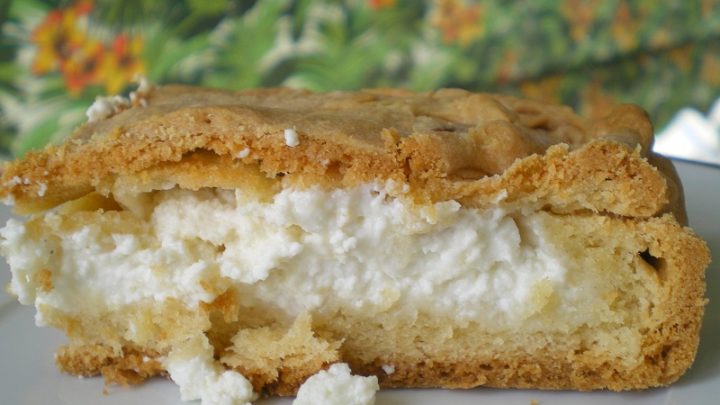
Tyropita with Kourou Phyllo
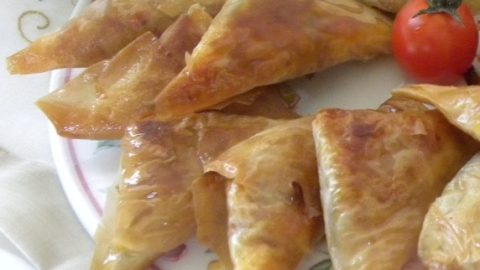
Tyropita Kourou is a cheese pie made with a type of phyllo made with butter and yoghurt, which I would describe somewhat like tart dough.
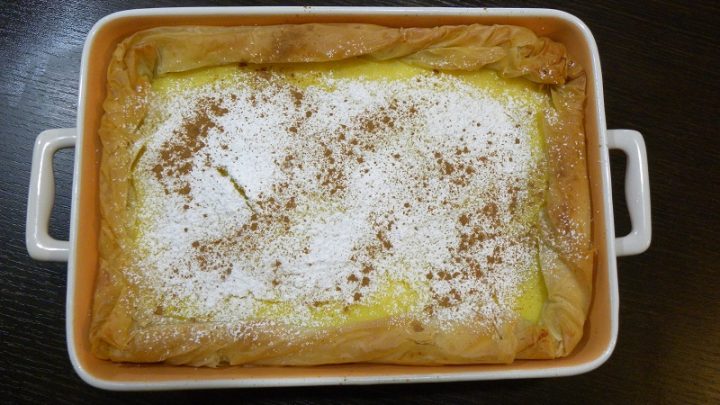
Galatopita with phyllo
Galatopita, which means milk pie, is a traditional sweet pie from Arcadia, Peloponnese. The original recipe was made during Easter.
Kopiaste and Kali Orexi!

This is really interesting Ivy. For starters, I've never heard of it and I love the whole concept behind it! Pumpkin is delicious and the cheese is a perfect partner with it.
The make some fabulous pites in Thessalia and thanks in large part to the Vlaxi. This looks wonderful and I think sage (faskomilo) pairs well with pumpkin.
I bet the Badjina is already gone!
Peter G, it's not a very well known pita even here in Greece but it's absolutely delicious.
Peter M, yes they make great pitas in Thessalia and badjina is nearly gone. There are just two pieces left but it's also delicious cold as well.
Oh, Ivy, that looks gorgeous! I can just imagine those flavors! It would be outrageously expensive for me to get those cheeses here in Japan, but I'll bookmark it and make it if I ever move back to the States again. Yum yum yum.
Hi Abigail. I know feta is quite expensive but hope one day that you will make it.
I love this "naked" pie sis. It is worht the expense of the feta in my opinion. It brings to mind a zucchini pie that Aglaia taught us to make....
Val, there are a few types of pies with zucchini but I have never made one.
Hey there - adopt a blogger matches are up on my blog! Thanks for participating 🙂
Hi Arfi. Quiche sounds like a great idea and certainly you don't have to make anything Greek.
This looks simple and yummy 🙂
I'd like to participate on your event, Ivy but I don't know anything about Greek food. We often make spinach quiche (which is pie too, right?) and I am thinking something really Greek sound, you know. Any idea?
Thank you Usha.
wow... really nice & Fantatic... nice click.. Realllllllllllllllly Amazing........................
Mmm the feta sounds wonderful with the savory squash/pumpkin.
Looks delicious... love its name 😉
Waiting for more greek pies 😉