Epityron: An Ancient Greek Olive Relish
Among the simplest yet most telling preparations of ancient Greece is epityron (ἐπίτυρον), an olive relish served over cheese, built on balance rather than excess.
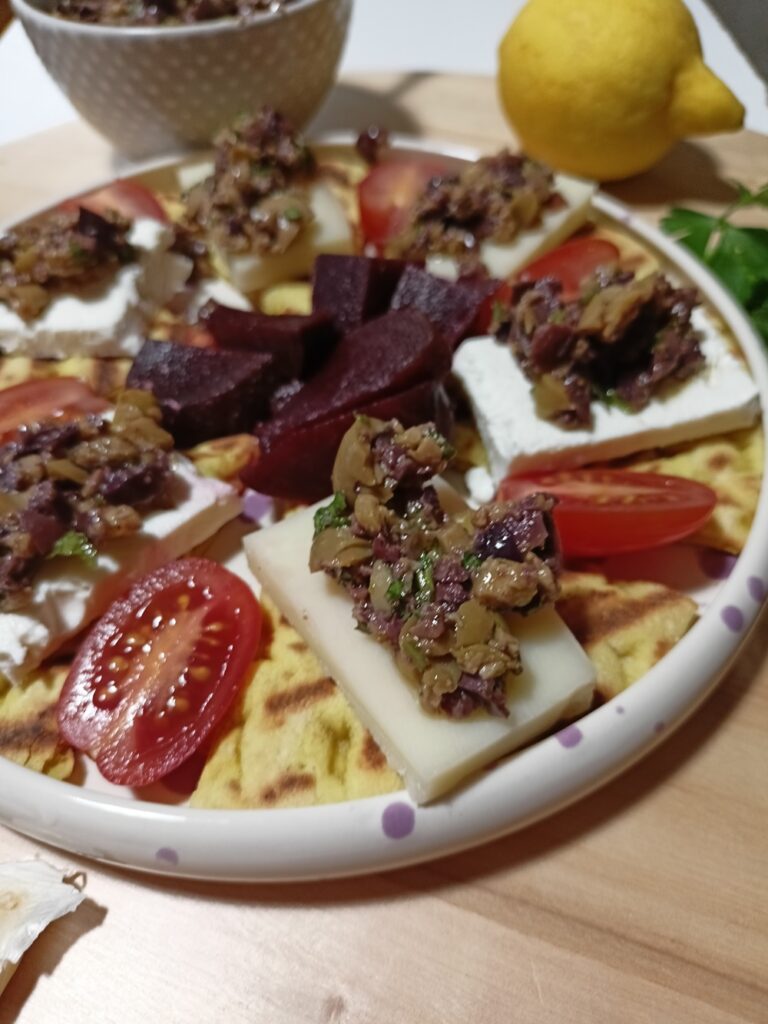
The word derives from ἐπὶ τυρόν, meaning “on cheese,” indicating its function as a condiment meant to enhance fresh cheese rather than replace it.
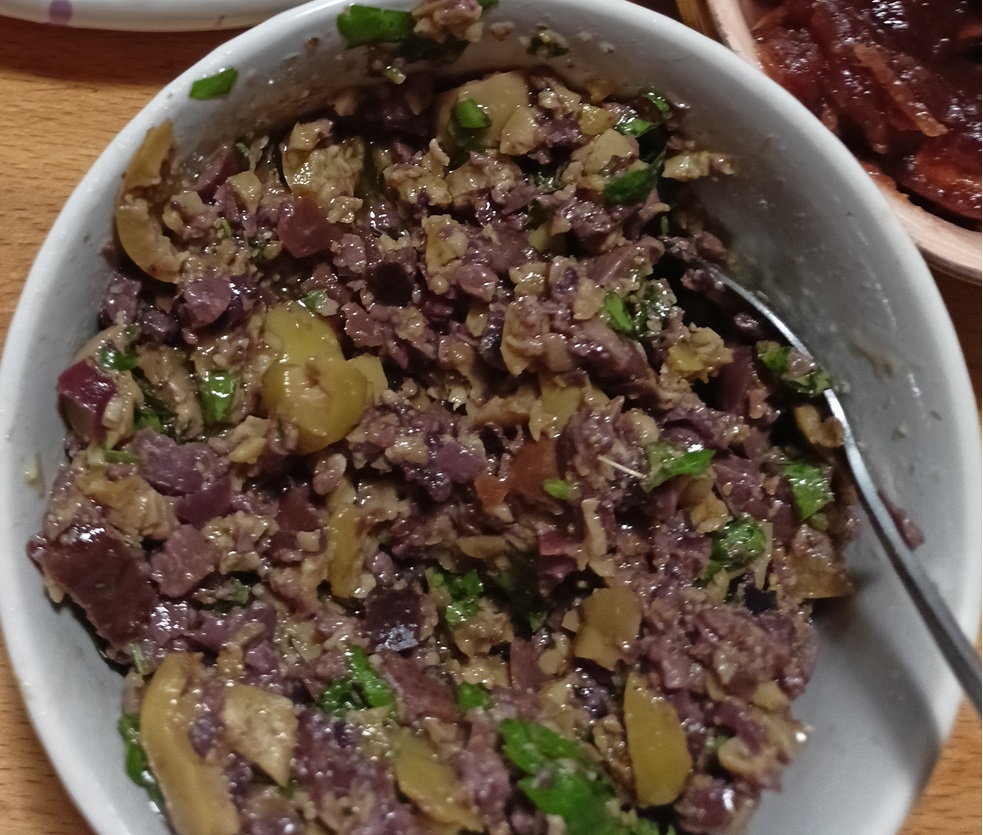
It was not a spread in the modern sense, but a finely prepared mixture placed carefully over a staple food.
About Epityron
Ancient authors, such as Athenaeus mention olive-based relishes as part of the ordinary diet, while Roman writers would later adopt the dish under the Latinised name epityrum. The Romans preserved it, but its roots are unmistakably Greek.
In recreating epityron today, the choice of olives matters deeply. I used my Greek Tsakistes green olives, already seasoned in the traditional way with coriander, garlic, lemon juice and olive oil.
These olives carry within them layers of flavour that echo ancient preservation methods.
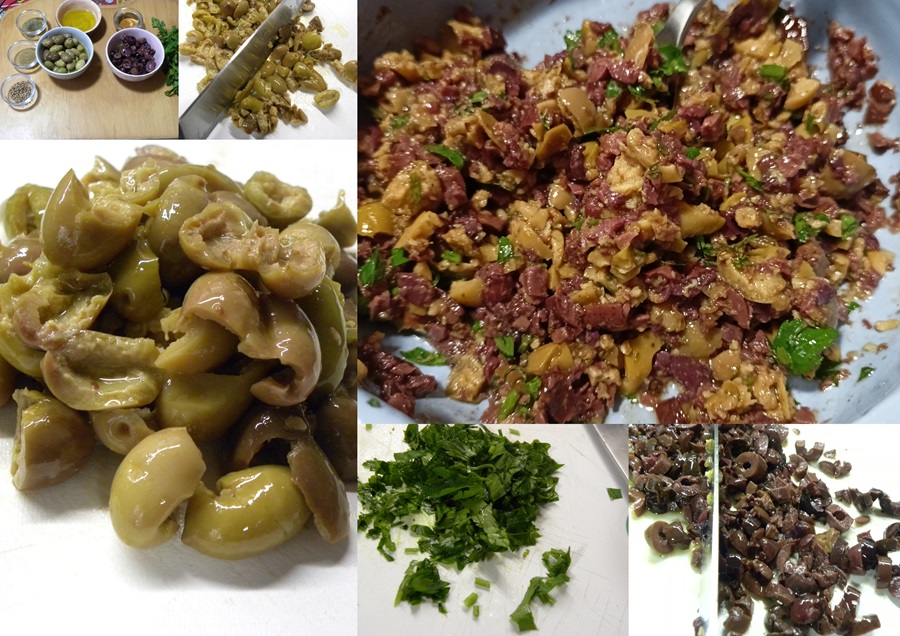
To complement them, I added finely chopped Kalamata olives, preserved in vinegar and olive oil, bringing depth and gentle acidity.
Instead of crushing the olives into a paste, they were finely chopped.
This keeps the texture lively and closer to what an everyday domestic preparation might have been, rustic, visible, and honest.
Ground coriander and cumin reinforce the spice notes already present in the Tsakistes, while oregano or thyme adds a herbal tone familiar to the ancient Greek pantry.
Fresh parsley brightens the mixture without overwhelming it.
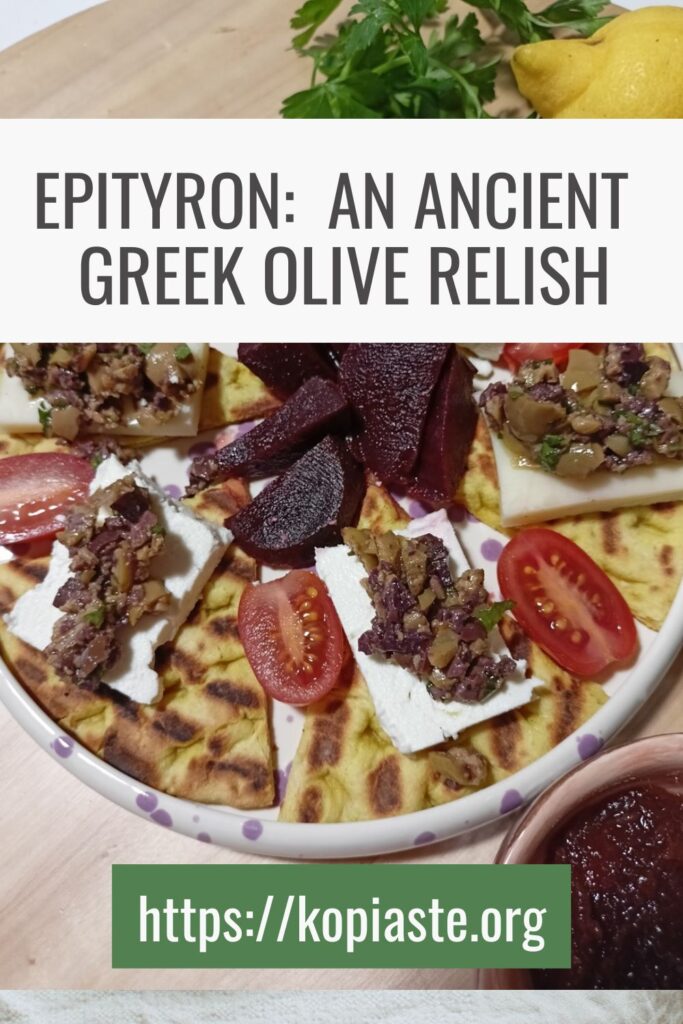
The result is not heavy. It is textured, aromatic, and balanced, especially when spooned generously over slices of fresh cheese.
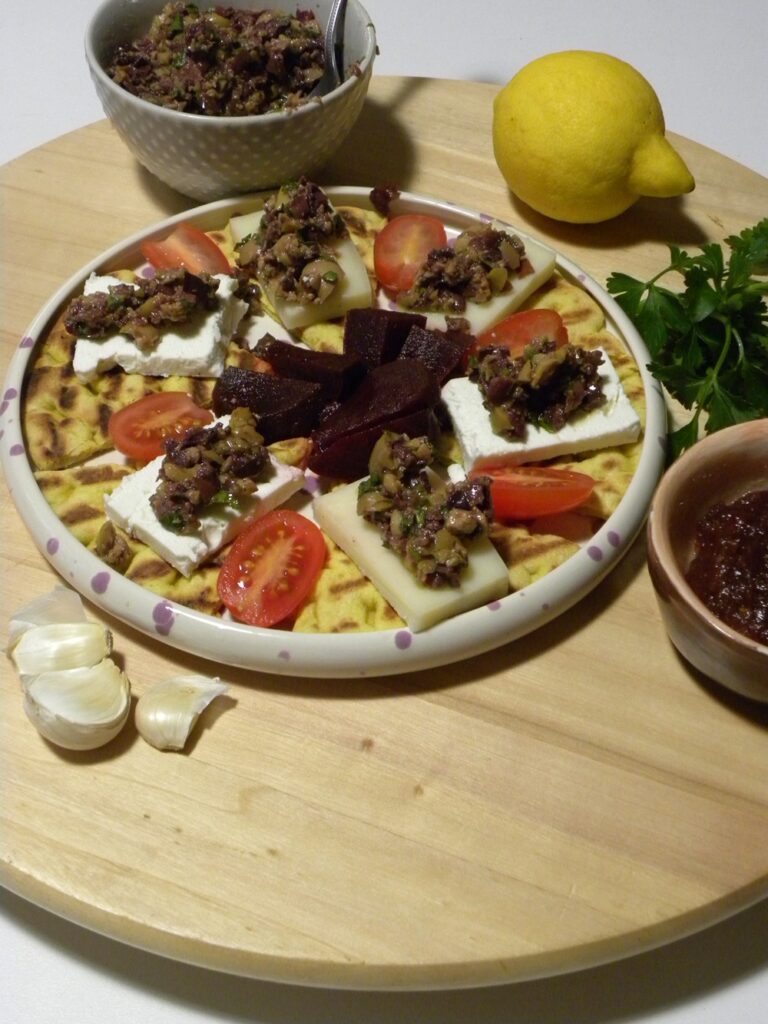
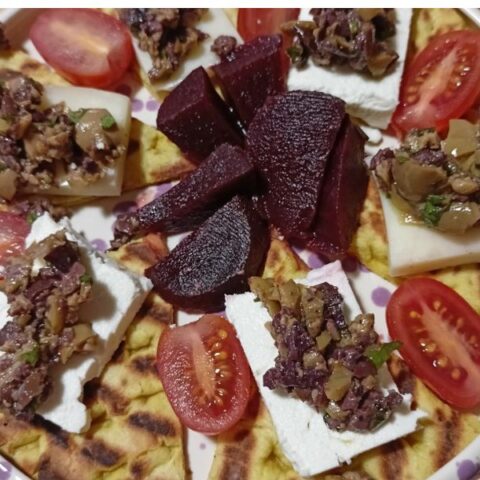
Served alongside simple Greek pita chips, quince paste, and pickled beets, it becomes part of a broader table, one that feels both ancient and timeless.
Preparing epityron today is less about reconstruction and more about continuity.
Olives, oil, cheese, herbs, the essentials of the Greek land, still speak clearly when left unadorned.
Epityron: An Ancient Greek Olive Relish
Epityron is an ancient Greek olive spread made with olives, olive oil, herbs, and spices. Discover its origins, history, and a simple recipe rooted in Greek culinary tradition.
Ingredients
- ½ cup green olives, finely chopped
- ½ cup Kalamata olives, pitted and finely chopped
- 2 tablespoon extra virgin olive oil
- 1 tablespoon red wine vinegar
- ½ teaspoon ground coriander
- ¼ teaspoon ground cumin
- 1 teaspoon dried oregano or fresh thyme
- 2 tablespoon finely chopped parsley
- Garlic (optional, used sparingly)
Instructions
- Pit the olives and crush them roughly in a mortar, not to a paste but to a coarse spread.
- Add olive oil gradually, working it in until the mixture is moist and spoonable.
- Season with a little vinegar or wine for acidity.
- Add the crushed spices and herbs, tasting as you go.
- If using garlic, add a very small amount, finely mashed.
- Let the epityron rest for at least 30 minutes before serving.
- Serve with bread, barley rusks, or alongside simple vegetables.
Nutrition Information
Yield 1 Serving Size 1Amount Per Serving Calories 757Total Fat 77gSaturated Fat 10gUnsaturated Fat 66gSodium 2744mgCarbohydrates 20gFiber 12gSugar 1gProtein 4g
"These values are automatically calculated and offered for guidance only. Their accuracy is not guaranteed."
Kopiaste and Kali Orexi,