
Greek Style Purslane Pesto and Farfalle
Purslane (portulaca oleracea), grows everywhere so it is considered by many as a weed. However, if you don't have a garden you can also find it at the farmers' market. It has so many health properties that we should all start eating this wonderful treat offered to us so generously by nature.
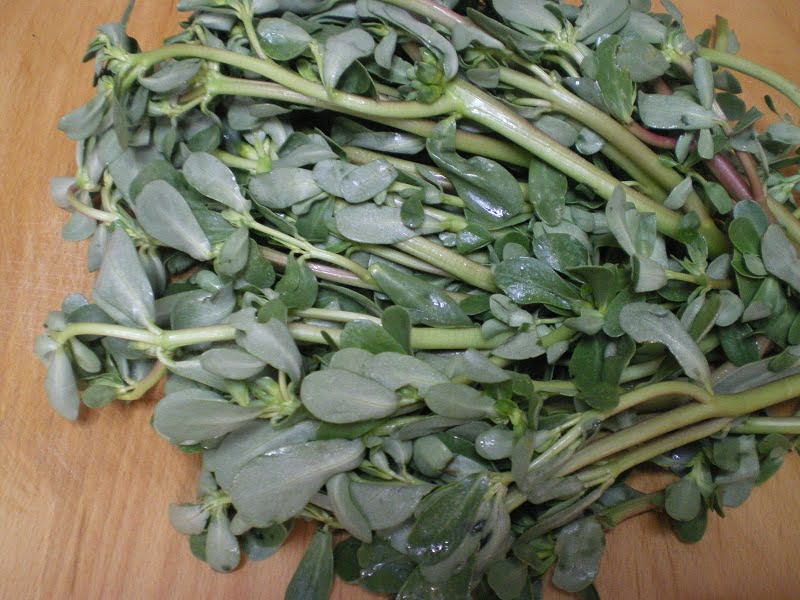
On Tuesday I went to the farmers’ market and could not resist buying purslane. It’s not that I am a fan of this vegetable as I remember being indifferent when eating it in salads when I was young. This is why I never bought it before but reading about it’s properties in the History of Greek Food, it made me think twice and thought I’d give it a second chance.
Washing purslane is a bit labour intensive but it's worth it. I soaked it in water and washed it several times. I trimmed the tops which are more tender and have kept them for a salad. As I don’t want to be eating purslane everyday I thought of making a pesto while it is still fresh.
Every day (or almost every day) my husband and I go swimming, so when we come back I don’t feel like being in the kitchen for hours, so I try and make something easy and light. What better than a quick pasta!
Ever since I tried pesto with feta cheese I loved it and since I also like to support the local products I have been making my pestos with feta. I am still experimenting with different vegetables and each one is better than the other. I also like putting different kinds of nuts every time.
The flavour of this pesto is slightly sour and feta gives it a creamy texture. It is delicious served with pasta, but I think it would also go well with fish or anywhere else pesto is called for.
This week's host of Weekend Herb Blogging is Simona, of Briciole, who is a native Italian living in the United States (Simona I hope you won’t mind my Greek version of pesto). I am sending this recipe to WHB, created by Kalyn, of Kalyn’s Kitchen.
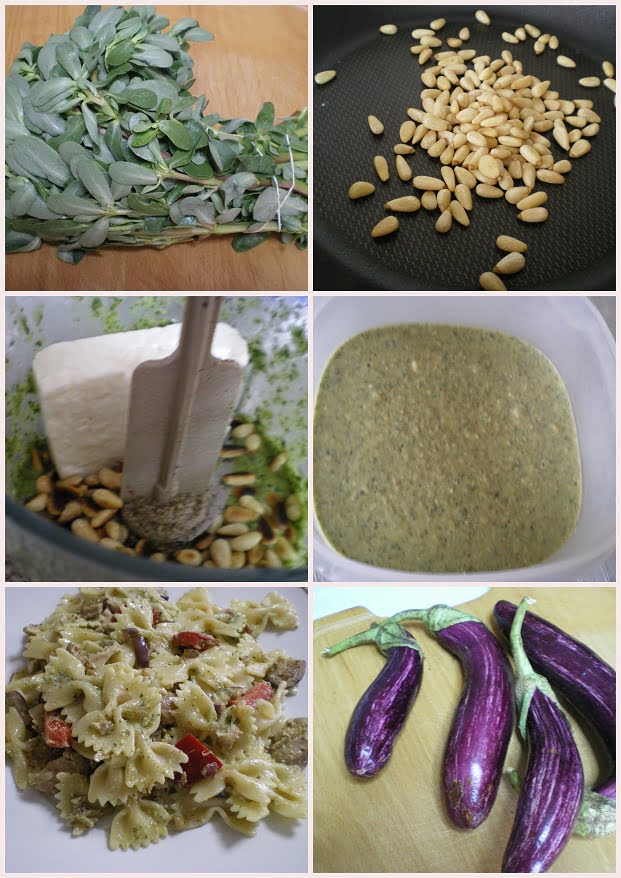
Greek Style Purslane Pesto
Ingredients
- 1 cup of purslane leaves
- ½ cup of extra virgin olive oil
- 1 clove of garlic
- 4 tablespoons lemon juice
- Salt (not much as feta is salty)
- 100 grams Greek Feta Cheese
- ½ cup roasted Pine Nuts
Directions:
- Roast pine nuts in a non stick frying pan for just a few minutes being careful as they burn easily and when roasted on both sides set aside until they cool down.
- Combine all the ingredients (except feta and pine nuts) and half the olive oil in a blender or food processor. Start blending and then add the pine nuts, feta, and the remaining olive oil slowly-checking for the consistency that you prefer. If you have the option drizzle the olive oil as you blend.
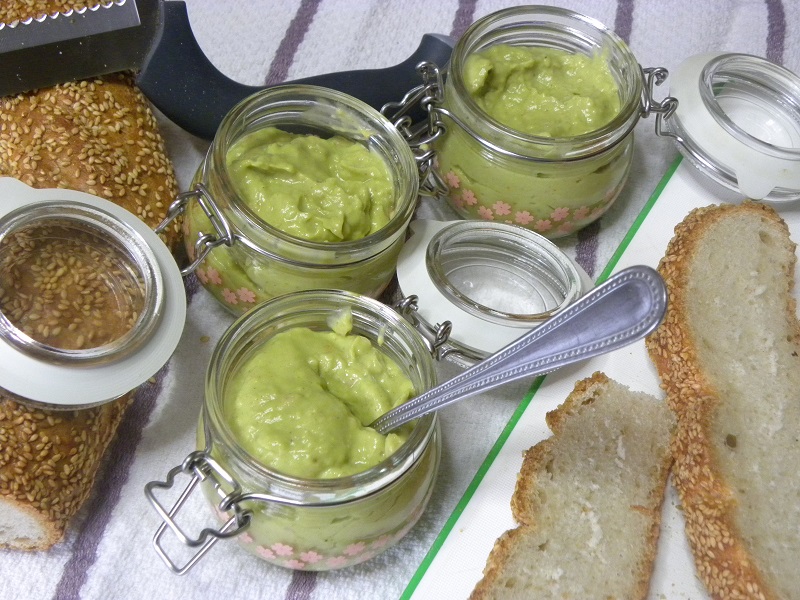
- It makes about 1 cup of pesto which can be eaten fresh (within 3-4 days preserved in the refrigerator) and/or frozen for later use.
We were very hungry so I forgot to take a picture but I still had the remaining half in the refrigerator.
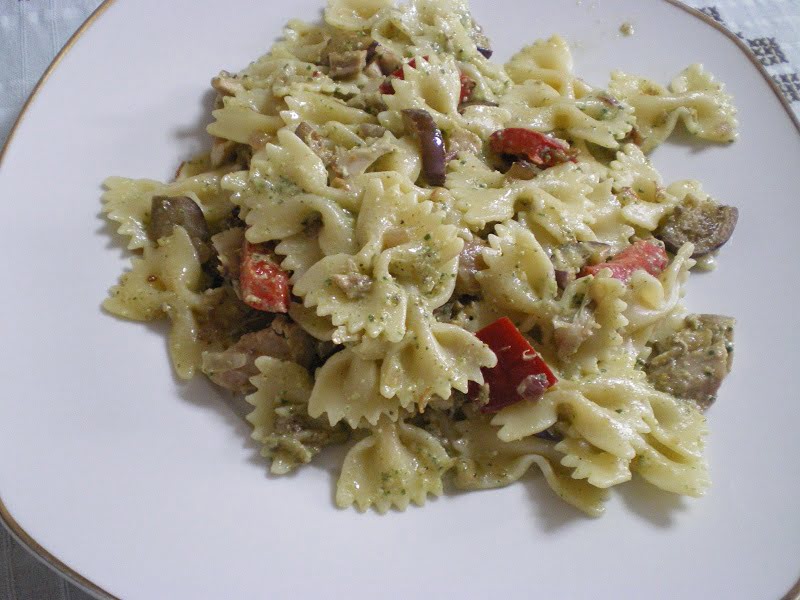
I had some leftover chicken, so I made this delicious pasta dish.
Farfalle with purlane pesto and aubergines
Ingredients:
- 1 packet (500 gr.) farfalle
- 1 onion finely chopped
- 1 aubergine (eggplant) diced
- ½ cup of julienned red bell peppers
- 2 spoonfuls of olive oil
- 1 cup of leftover chicken breast or thigh, cut into bite sizes
- Purslane pesto
Directions:
Boil pasta in salty water for 15 minutes al dente or according to the instructions on the package.
Meantime, heat the olive oil in a skillet and sauté the onion. Stir a few times to caramelize the onion but not to brown.
Add the aubergine and sauté as well, stirring until it is soft. Add the red bell pepper and just mix with the other ingredients a few times. Finally add the cooked chicken and mix.
(If the pasta is not ready (as this takes about 10 minutes to prepare) remove from the heat and when pasta is done, drain and add it to the skillet).
Put it back on the heat again, season with salt and pepper and put as much pesto as you like (I added about half the above quantity).
You might also like:
Cardamom and Rocket Pesto
Lavraki (seabass) with roasted potatoes and Greek Style Oregano Pesto
Kopiaste and Kali Orexi!

Whoever owns this blog, I would like to say that he has a great idea of choosing a topic.
This is really a brilliant dish and entry! I have been wanting to eat purslane more often. This pesto is just wonderful for our summer here. Thank you!
Diane and Todd, don't tell me that you have purslane in your garden as well?
Another interesting pesto idea. wat is the name of purslane in greek Ivy?
I've never heard of purslane but that pesto looks wonderful, especially with the feta. I will have to look into the herb.
This looks SO delicious Ivy. I've never actually bought purslane, but I've had it a couple of times in restaurants. I bet it would make a great pesto, especially with the feta.
Yet another thing I have yet to try. I'm intrigued.
Sounds delicious Ivy! All that talk of swimming makes me long for summer ...
Peter, Corine, Elly, Giz, Cake, thanks for your comments. Peter, purslane is γλιστιρίδα in Greek. I'm off to the beach now.
A few years ago I made a salad with purslane from my garden, but this year I must be weeding too well! I don't think I've seen any at all. I really like the idea of pesto made with purslane and feta, very interesting! (And how fun that you're making a Greek version of an Italian dish and sending it to an Italian woman living in the U.S. Very international!)
Kalyn, I am glad you liked my pesto and pasta dish.
This is a very informative post Ivy as I've never heard of Purslane before. I'd be all over this pesto while it would be all over my pasta 🙂
What a lovely pesto and pasta dish. I am very fond of pine nuts..
Hey beach and all.. Envy you!!
Swati, "Sanhti or Punarva" is delicious, so are the pine nuts.
Lore, my next two recipes are about purslane, so you will find out more about this herb (and not weed as some people call it).