
Kolokassi (taro) and Pork in Avgolemono Sauce
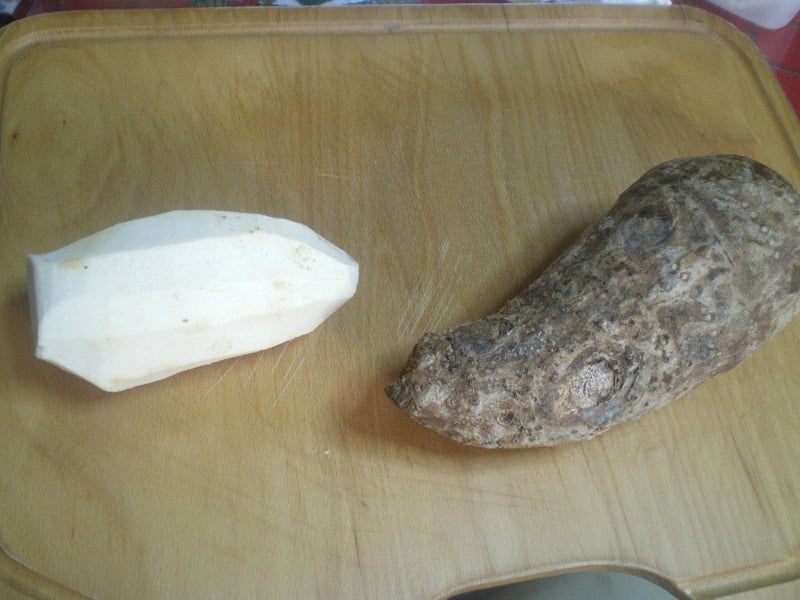
Kolokassi (taro) is not popular in Greece but we love it in Cyprus. Today I am posting a recipe you have never saw on the internet and I am sure you all want to see something new for a change, as it is one of my original concoctions. I made it with avgolemono sauce.
I hope you all had a wonderful Easter. This year we did not go to Sparta as my daughter wanted to stay and study. She is graduating high school and as the system in Greece sucks if you want to be admitted to University you must study day and night.
Like all Greek families we ate the usual Greek food, lamb, kokoretsi, magiritsa, tzatziki, mezedes, tsoureki, flaounes etc, so I am not going to repeat the same thing every year by adding new photos.
Last week when I went to one of the big chain supermarkets I was so excited when I saw they were selling taro which was labelled "Taro from Cyprus" that I wanted to shout from happiness.
After being thirty years in Greece, it is the first time I've seen taro being sold and up to now I would bring some along from Cyprus whenever I visited the island.
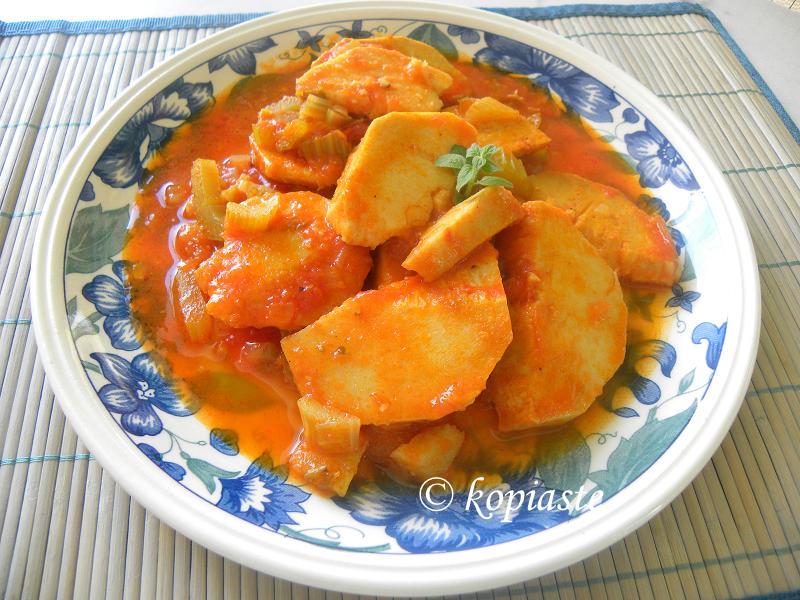
I was so excited that I bought four roots and when we returned back, I immediately cooked two of them, as a side dish, "nistisimo", which means without any meat, as it was the period of fasting.
I just followed the traditional way of cooking taro in Cyprus without adding any meat and made a stew with celery.
The taro root produces some offshoots, which are called "poulles". They are peeled and fried in olive oil, seasoned with salt and pepper, crashed coriander is added and lemon juice and served as a side dish.
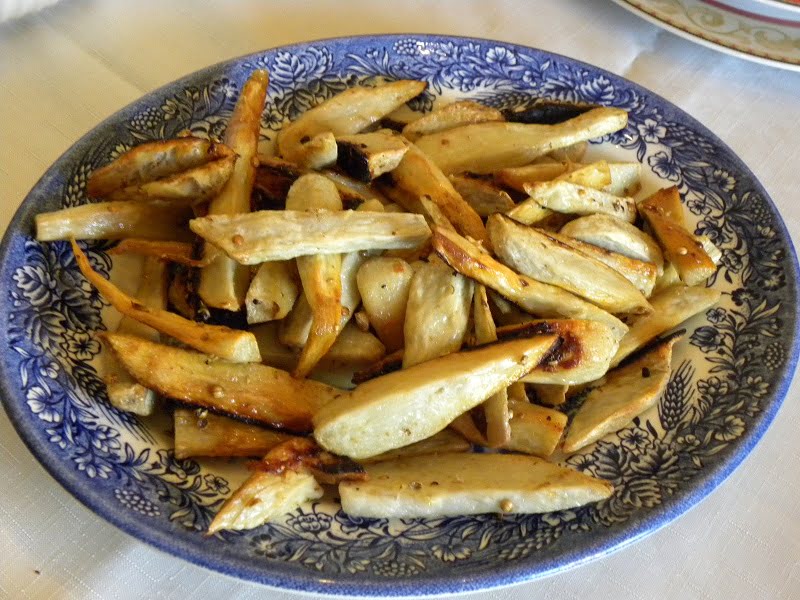
I still had the two other roots and since last week I made the stew, this time I wanted to create something new and unique.
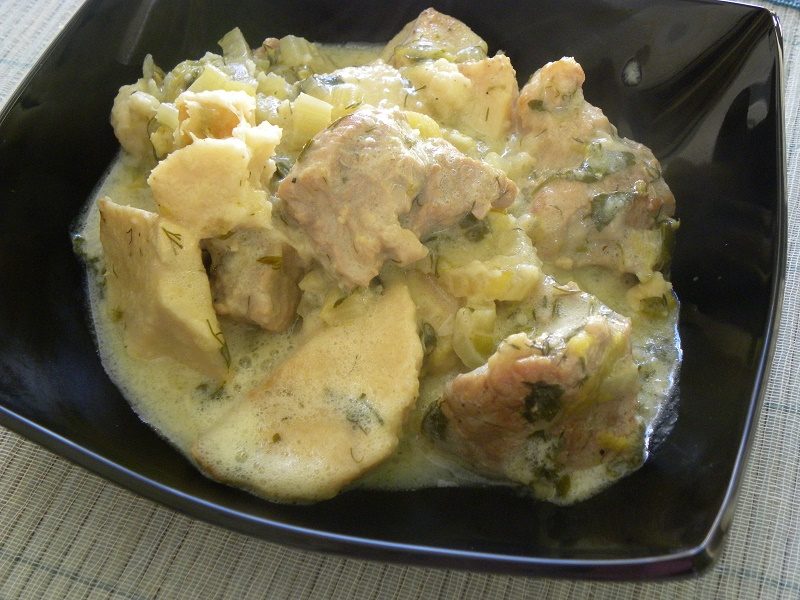
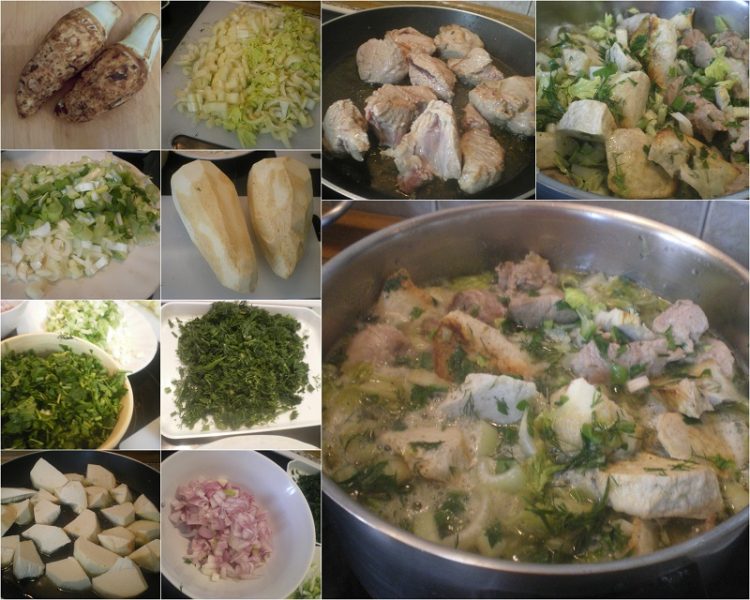
After sauteing taro, the meat and the onions I added lots of celery stalk, dill and parsley and seasoned it with salt and pepper. The water added was just enough to cook the dish and when it was cooked, I prepared an avgolemono sauce, which I poured in the saucepan.
This egg and lemon sauce, mixed with the other ingredients, made a creamy subtle lemony sauce which paired perfectly with the other ingredients.
Note: If you are using other taro other than colocasia esculenta, please follow the cooking procedure for that specific root.
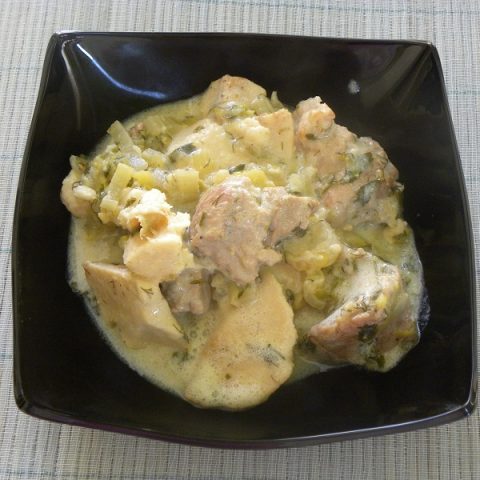
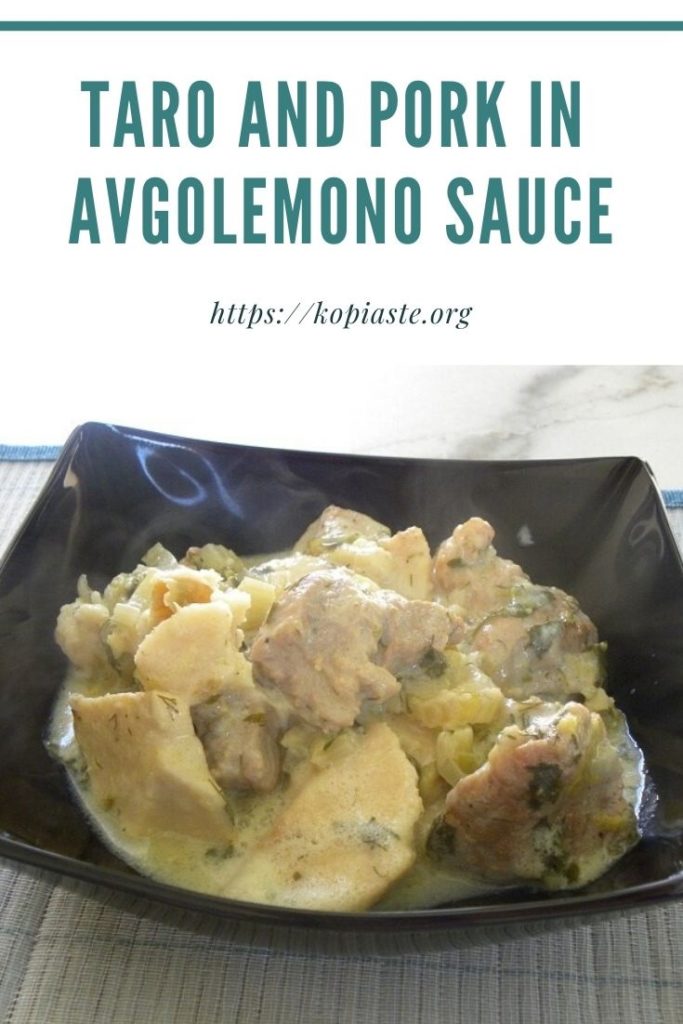
Kolokassi (taro) and Pork in Avgolemono Sauce
Kolokassi (taro) is not popular in Greece but we love it in Cyprus Today I am posting a recipe you have never saw on the internet and I am sure you all want to see something new for a change, as it is one of my original concoctions I made it with avgolemono sauce.
Ingredients
- 750 grams boneless pork
- 1 kilo taro( 2 roots)
- 4 spring onions, finely chopped
- 1 small onion, finely chopped
- 500 grams celery stalks (about 3 - 4 cups), chopped
- ½ cup dill, finely chopped
- ½ cup parsley, finely chopped
- ⅓ cup olive oil
- Salt and freshly ground black pepper
- 1 cup water
For the avgolemono sauce:
- 3 eggs
- ½ cup lemon juice
Instructions
- Wash and cut the meat into big pieces and set aside to drain.
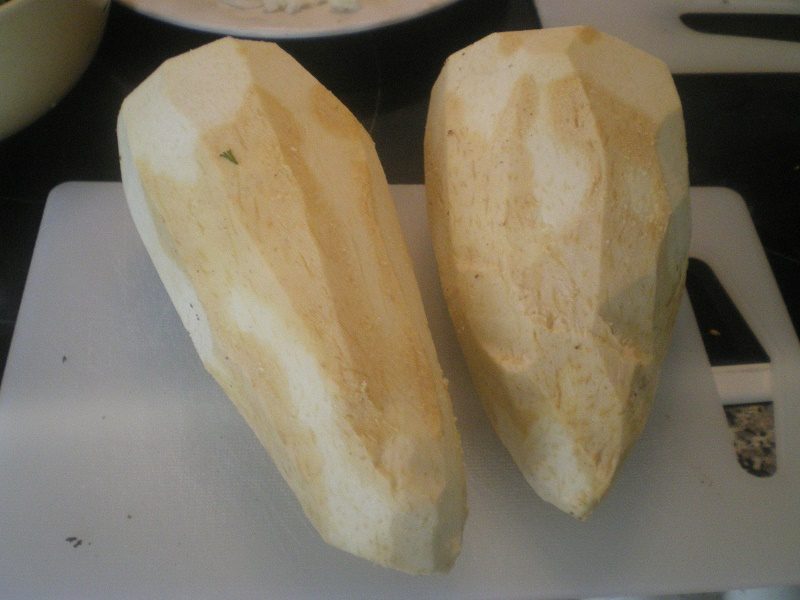
- Cut the ends and peel the skin off the kolokassi, holding it with a paper towel taking care that you do not soil the rest of kolokassi with your hands Do not wash but wipe with a paper towel if necessary
- With a sharp knife, cut across 1 ½ cm (½ inch) thick half way then break off Repeat to the end.
- Heat the oil in a sautéing pan and sauté the kolokassi Remove to a saucepan and then sauté the meat as well, on both sides Remove to the saucepan and add the onions and sauté until translucent. Empty in the saucepan and add the celery, parsley and dill.
- Season with salt and pepper and add water
- Bring to a boil, cover pan, reduce heat and simmer for about an hour until both meat and kolokassi are tender.
- To make Avgolemono sauce In a separate bowl, beat the eggs and add the lemon juice. While beating, take a ladle of stock from your saucepan and slowly add it to your egg and lemon mixture while whisking.
- Slowly add your avgolemono mixture back into your saucepan and then toss the saucepan around so that avgolemono is mixed with the remaining food.
- Leave it to rest for 15- 30 minutes and then serve with lots of crusty bread.
Nutrition Information
Yield 6 Serving Size 1Amount Per Serving Calories 703Total Fat 32gSaturated Fat 9gTrans Fat 0gUnsaturated Fat 21gCholesterol 203mgSodium 269mgCarbohydrates 64gFiber 11gSugar 4gProtein 38g
Kopiaste and Kali Orexi!

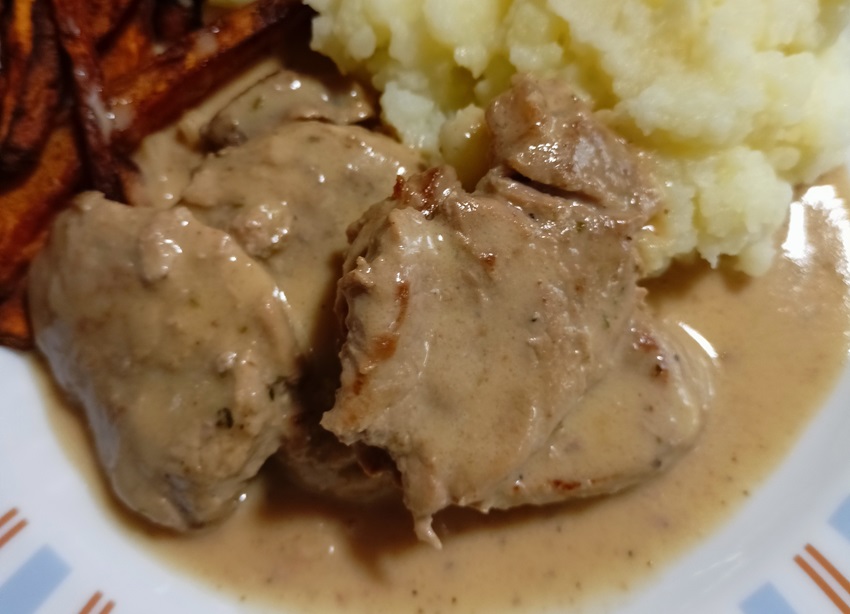
We use taro in stews (giving stews a thick gravy). Taro can be cut into bigger chunks and braised or cut into smaller cubes and used in fried rice with ground meat. Of course, taro in sweet desserts too 😀
They are so versatile!
Haven't had any taro dish for such a long while.
This one is so different from those I had before. The taro absorbs all the gravy and juice from the pork....mmm...yummy!
Christos Anesti Ivy! Great idea to combine taro with pork and give it Greek flavours with the avgolemono sauce.
Alithos Anesti kai Chronia Polla.
I've never heard of Taro! What is it like?
And my friend just moved to Greece last year to teach in Athens. She says the schoool system is horrible there! But I think it's just b/c she is used to American school systems and it's probably different, as is everything else.
Niki, I would say that it resembles like sweet potato but it is a little bit coarser than potato but you should try it, it is delicious.
That is an original dish! I have never eaten taro roots... Interesting and surely delicious!
Cheers,
Rosa
This pork sounds wonderful with taro root and the lemony sauce!
Ivy, what a great dish...I may be bias since I love taro...so for sure I'd go for it 🙂
Ivy, come with great pleasure I offer you two superb virtual prizes as a token of appreciation and friendship.
Thank you so much guys!!
Sounds like an excellent combination Ivy. We must have different varieties of taro here in Hawaii (and we have literally hundreds, both wetland and dry). It needs to be cut up, then boiled and the water changed once to three times or so, depending on the variety, to get rid of an irritant, oxalic acid. I'd like to get hold of the type grown in Cyprus and start some in my garden.
Claudia, as I said to Cath it is called colocasia esculenta and maybe you can find the seeds on the internet. It is a very beautiful ornamental plant to have in your garden.
I cooked a taro dish recently; I love your meaty version with the celery and sauce, very Greek.
Yum! My husband is Tongan, and loves it just plain boiled or with coconut milk, so it's great to find a couple of other recipes for taro. The best taro I've had has had an almost chestnut flavour and very very creamy. I've often thought it would make a fantastic gnocci too, but lacking good pasta making skills I've never given it a go. Maybe this year I'll bite the bullet and try it out.
PS...we keep our taro for months (or as long as it lasts with my hub around) in the shed, or garage where it can get a bit of air and not much sun. In Tonga outside of everyone's house you would find piles of taro and yam stacked ready for the coming months!
Cath, scientific name of the variety used in Cyprus is called colocasia esculenta, if that helps https://en.wikipedia.org/wiki/Taro and does not need to be boiled before. I knew that taro can be kept for a long time if well aired but I've only tried keeping it for a few weeks.
great and unique combination!you are only inspiration,ivy!
Ivy , I love soo much the idea of this recipe, but I've never seen taro around !! May in an ethnic stand at the market !! I love avgelomono !! A big hug to all of you !
I am surprised because colocasia was known to the Romans.