
Traditional Lambriatika Koulourakia (Greek Easter Cookies)
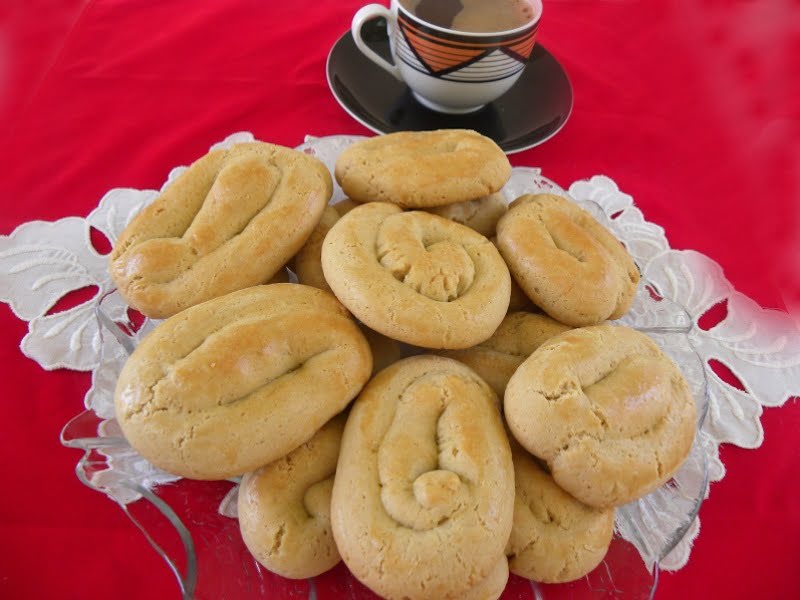
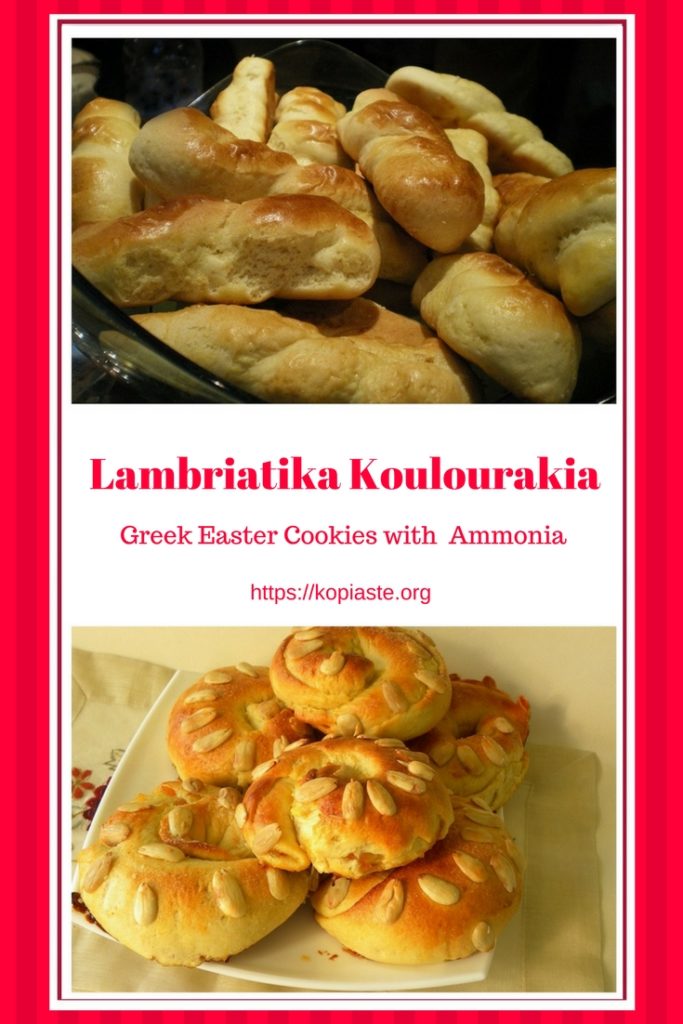
Traditional Lambriatika Koulourakia (also called Paschalina Koulourakia), are Greek Easter butter cookies, which are traditionally made only during Easter and have a distinct flavour as baking ammonia is used as the leavening agent.
Baking ammonia, or ammonium bicarbonate, was used before the advent of baking soda and baking powder.
It is a chemical leavening agent originally made from the horns of deer. The chemical formula is NH4HCO3.
When heated, baking ammonia breaks down into ammonia (NH3), water and carbon dioxide.
The carbon dioxide makes cakes and cookies rise, the same way that carbon dioxide given off by other chemical leaveners does.
Do not confuse baking ammonia with regular, household ammonia used as a cleaner, which is poisonous.
I used to make the traditional recipe for many years but each year I tweaked it a bit and ended up with this recipe. Some times I add orange or lemon zest and some orange juice with more flour.
As we usually left for Sparta each year, I have never posted the new changes to the recipe before, so I am posting both and you can decide, which one you like best.
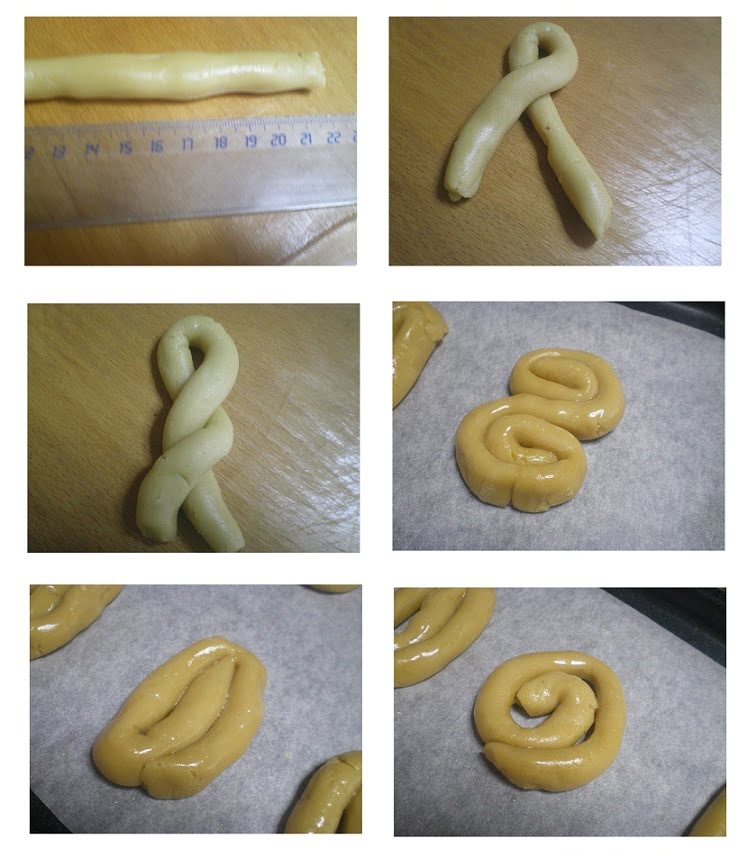
They are formed into different shapes. One shape is to make long cords (about 15 - 20 cm), fold the cord in the middle and twist it twice.
Another is to twist the two ends into opposite spirals shaping it into a capital S or just create various circles.
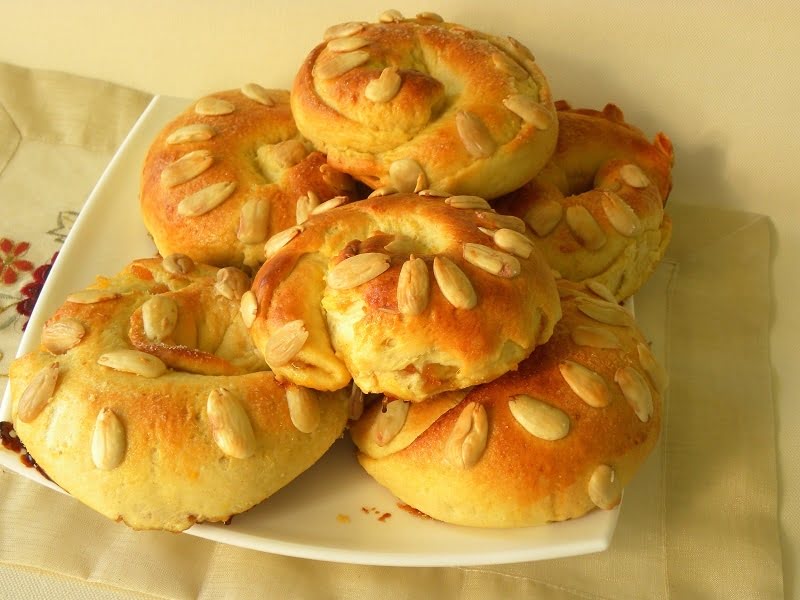
We can also add some almond shivers on top if we like.
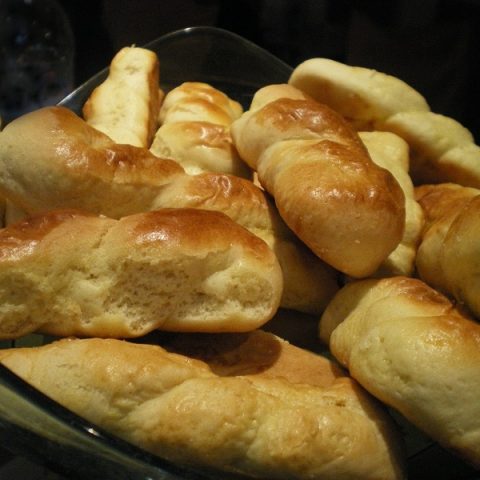
If you prefer to make the cookies with butter instead of olive oil, see my other recipe which is a twist I made much later on.
You can also watch the video I made for that recipe.
Traditional Lambriatika Koulourakia (Greek Easter Cookies)
Traditional Lambriatika Koulourakia (also called Paschalina Koulourakia), are Greek Easter butter cookies, which are traditionally made only during Easter and have a distinct flavour as baking ammonia is used as the leavening agent.
Ingredients
- 6 eggs
- 6 vanillins or add vanilla
- 320 grams mild olive oil or half olive oil and half vegetable oil
- 400 grams sugar
- Juice of half a lemon
- 2 teaspoon baking ammonia
- 1 cup milk
- 1500 grams flour
- 1 teaspoon baking powder
- 1 yolk and 1 tablespoon milk for brushing
Instructions
- Beat the eggs with the vanillin.
- In another bowl, beat the sugar with the olive oil until fluffy.
- Add the eggs gradually and mix until incorporated.
- Dissolve the baking ammonia in the milk and add it to the batter.
- Mix the baking powder with the flour and add it gradually to the dough until it is not sticky on the hands.
- Form the cookies the shape you like and put them on a baking tin lined with with parchment paper.
- Preheat oven to 180o C.
- Beat one yolk with a tablespoon milk and brush the cookies. Bake for 15 - 20 minutes or until golden brown.
- Remove to a rack to cool and store in an air-tight container.
Nutrition Information
Yield 100 Serving Size 1Amount Per Serving Calories 107Total Fat 4gSaturated Fat 1gTrans Fat 0gUnsaturated Fat 3gCholesterol 13mgSodium 12mgCarbohydrates 16gFiber 0gSugar 4gProtein 2g
Kopiaste and Kali Orexi!

Hello Ivy,
I would like to try your recipe as the one I have for some reason results in hard koulourakia. what does using the ammonia result in that is different from baking powder? are your cookies more on the softer side or crunchy. looking forward to hearing from you. thanks...Mina
Hi Mina,
They are on the softer side. Baking ammonia is the precursor of baking powder and baking soda. It is found in older traditional recipes.
Kalo Pascha!
Happy Easter Dear Ivy!
I landed here in my search for Koulourakia using baking ammonia. I am going to give your recipe a try. I love this site and will share the recipe on Pinterest.
Thank you for such lovely, authentic recipes. I want to buy your cookery book!
Thank you Dear Fiona, Wishing you a Happy Easter!